- 13 Posts
- 50 Comments
Just today I have again started to listen the book “Ageless” by Andrew Steele, which mentioned this tortoise at the very beginning. BTW, a great book about the real science how we can practically stop aging and dying from it.

 2·22 days ago
I had big problems with languages all the way up to university, but get Esperanto pretty quickly. Good luck 🤞
Ah, OK. Because someone was posting about Esperanto in a different writing system.
By chance, is it you who is posting this on Mastodon?
If you are website enjoyer, https://lernu.net/ is a solid, free of charge web course in many languages, with big community.
I have also heard good reviews on the Zagreb Method - https://esperanto12.net/
If you prefer apps, https://www.duolingo.com/ works great in English, if a lot of examples is your way to go.
Of you are a book person, I have read that “Complete Esperanto” by Tim Owen is highly acclaimed. Also “Esperanto per rekta metodo” (“Esperanto by direct method”, so directly on Esperanto with elimination of translations) works great for many people.
Some very basic stuff, mostly list of common phases for traveling, it’s available at Wikivoyage, in several languages 👇 https://www.wikidata.org/wiki/Q143#sitelinks-wikivoyage
Using Anki flashcards helps to memorize words, but I am not using it so I am not sure where to find the data to use…
If you prefer in-person course, you may ask people from the Esperanto organization in your country (see https://uea.org/landoj), or visit some meeting to get in-depth answers and make new friends (see https://eventaservo.org/).
Ultimately, it depends on your learning style to select (or create) a learning process, but these are solid. Enjoy, and please comment here after some time about your progress. I would love to know!
English, as an national language, is great for national communication.
But using national language for international communication is like using black-white television to watch a color movie - it kind of works, but it definitely loses a lot.
There are at least 2 important factors:
-
neutrality: English used for international communication favors people from English speaking countries. Inside of Europe that is not to big problem, because Ireland and Malta, while being great counties, have relatively small population - so English can work as a reasonably neutral language for European communication. But when it comes to Europe in world - English is used but a country that left us and by country that wages trade war against us. That highlights that English definitely is not a worldwide neutral language.
-
ease of use: Esperanto was designed to be easy to learn and use, while functioning very well as a mean of communication. It does not carry a burden of centuries of non-systemic evolution, so it does not have things like irregular verbs. It’s grammar is very regular with simple rules. It enables creating words with a set of prefixes and sufixes so one does not need to learn a bunch of new (different) words about related things (like: to eat, to snack, to feast, food, meal, cantina, utensils, etc. - they are manĝi, manĝeti, manĝegi, manĝo, manĝaĵo, manĝejo, manĝiloj etc). Experience shows that learning Esperanto is 5-10x faster that learning national languages. It’s just much not efficient.
Than comes other factors, like pushing some way of thinking, usual for one specific nation, to all humankind, atc, but those 2 are the basic ones.
-
I even work on spreading Esperanto, as a neutral language for Europe and humankind 🫡
If that money would go to create a next gen agriculture, it could be a great investment. I mean things like cellular agriculture, cultured meat, precision fermentation, generally more non-animal foods.
Hopefully it would have better logistics than Martian probe…
 581·27 days ago
Modern engineer would built an aquaduct in kilometers, not miles 😅
You automatically are 😎 That’s the magic of federating.
You can search and follow users from other PixelFed (even Mastodon!) servers in same / similar way as users on gram.social. I am on gram.social too and I hardly know whether some user is even on PixelFed 😂
As they are highly flammable it is good that they spend quite a bit of time in water.


Unfun fact: For tobacco production, specifically drying the leaves, are quite often used wood from local rainforest. Not very enviro friendly. The slovakian forest protection organisation VLK was working on some outreach materials about this topic but haven’t finished them, but I have read the draft.
Also, smokers not just die because of smoking. They die in bad health that often needs years of treatment, which can be very expensive, but also polluting and diverging resources from productive work… I am not sure about the pluses and minuses and final calculation, but it is definitely not super clear.
So no, smoking is definitely not a good way to protect environment.
They are descendants of dinosaurs not for no reason.
Advanced automation 😎
And changing the socio-economic system so jobs are decoupled from survival.
The risk of having abroad dependencies…
On the other hand, having great collaboration with abroad increases positive peace, which helps to prevent wars. But not fully…
For years I am watching the cryptocurrency Nano ($XNO). As many cryptocurrencies, it is free / libre / open source, decentralized (belongs to no nation). But it is also totally without fees (I haven’t believed it but checked and it is really true), super fast (full confirmation under 1 second) and super energy efficient (on par with usual bank card transaction). And the guys beyond it are there for the original goal of crypto - enabling independent money usage - while also explicitly distancing themselves from speculative “investing”.
But it is not yet “commercial grade”, so big companies are for now not encouraged to use it for high throughput use cases. And it is also not yet widely accepted by vendors, and widely owned by paying customers. Basically the chicken and egg problem…
We will either pay now and less because of carbon tax, or later and more for repairing nature damages.
That’s the toxic positivity people are talking about!


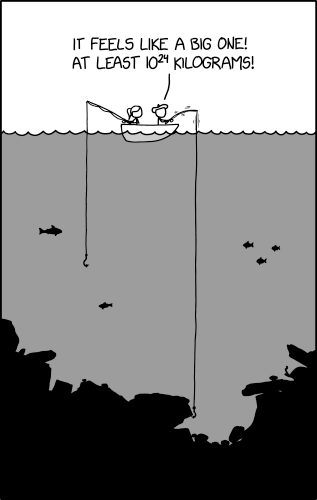


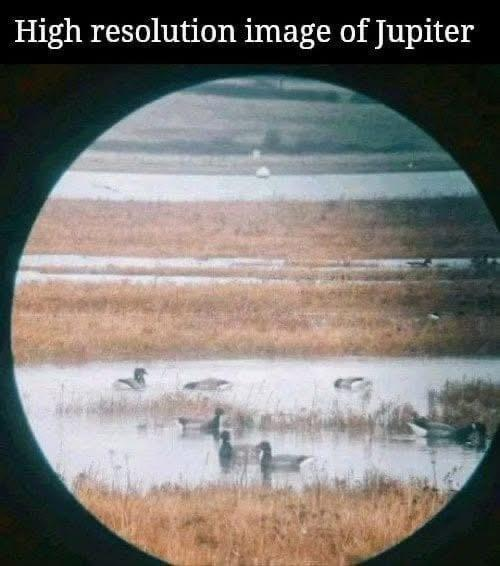
So, a new Copenhagen interpretation? 🤔